

There’s a version of Greece most people know.
White houses. Blue domes. Aperol spritzes with a view.
And then there’s Epirus.
No one accidentally ends up in Epirus. You go there on purpose—or not at all.
We went.
It started the way all good Greek road trips start: with a plan that looked clean on paper and immediately became something else the moment we hit the mountains.
This trip, by the way, wasn’t supposed to happen now.
It was meant for last March. Life had other ideas. Greece does that sometimes—delays things just enough so you experience them at the right moment instead of the planned one.
Turns out, this was the right moment.
Zagorohoria first.
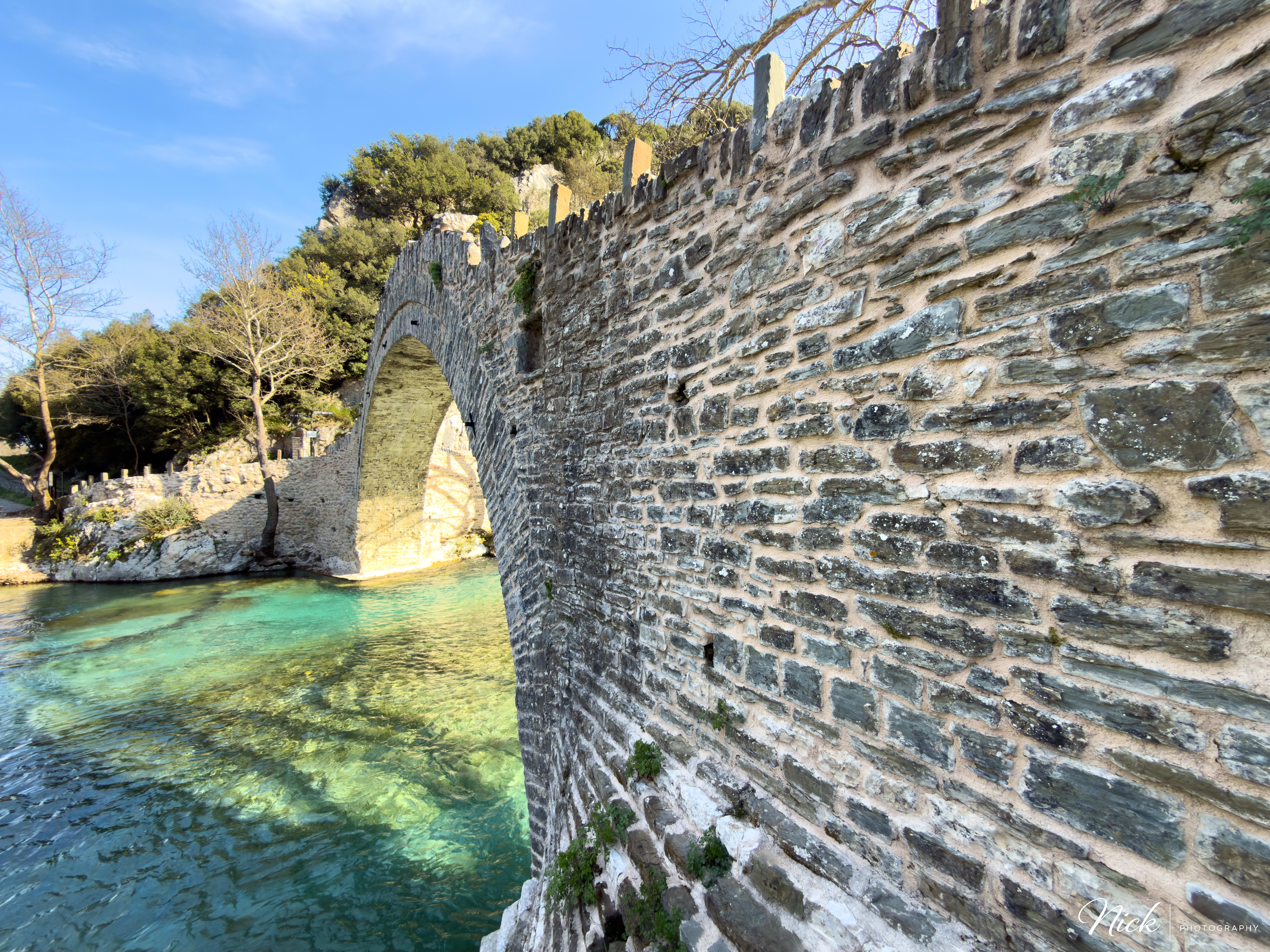
Stone villages that feel like they’ve been there forever because they have. Roads that twist just enough to remind you that Google Maps is optimistic. And bridges, those famous stone bridges that look like they were built by someone who understood both engineering and poetry.
Bridge after bridge.
You stop. You walk across. You look down.
Repeat.
We walked across them slowly, like everyone does, pretending we weren’t slightly impressed.
Voidomatis River was next. Cold, clear, almost aggressively clean water. The kind of place that makes you question your life choices in cities. You don’t do much there. You just stand, look, maybe say “wow” once or twice, and move on.
Siga siga.
Papingo felt like a different rhythm.
The rock pools—Kolymbithres—are one of those places that sound overrated until you see them. Then you realize they’re not. Natural stone bowls filled with water so clear it feels edited.
We didn’t rush. That’s the trick in Epirus. If you try to “cover” it, you miss it.
Lunch? Wherever felt right. Not where the reviews said to go. Greece rewards instinct more than planning.
Monodendri and the monastery of Agia Paraskevi gave us the big view moment.
Perched on the edge of Vikos Gorge, the monastery doesn’t announce itself. You walk, you turn, and suddenly there it is—clinging to the cliff like it’s been negotiating with gravity for centuries.
We stayed longer than planned. No one complained.
Ioannina surprised us.
Actually—no.
Ioannina impressed us.
We arrived on Greek Independence Day. The city was alive in a way that felt effortless. Every café full. Every table taken. People outside, walking, talking, occupying the city the way cities are meant to be occupied.
Staying inside the castle? That’s a different level of experience.
You’re not visiting history.
You’re living inside it.
We walked along the walls, got lost in the narrow streets, took the boat to the island—Nissaki—and circled it slowly. No rush, no agenda. Just movement.
We visited the Museum of Ali Pasha, had coffee that lasted longer than necessary, and leaned into the rhythm.
This is where Epirus shifts from landscape to feeling.
And somewhere in there, a thought crept in:
If I had seen Ioannina before choosing Kalamata…
that decision might not have been so easy.
Ioannina would have given Kalamata a serious run for her money.
(Though let’s be honest—Taygetos is still our magic mountain. And the Messinian Gulf… that’s home.)
Let’s talk food.
Two dinners in Ioannina.
Both unforgettable.
Elevated Greek cuisine, local ingredients, zero pretension.
One night felt like Maria was cooking just for us.
The next? A full nine-course experience that kept surprising us.
And before Ioannina, in Aristi—the hotel restaurant? Michelin-star level.
Not “for the gram.”
For the memory.
We also did the Perama Cave.
Six hundred steps.
The last 163 going up.
You don’t think about it at the start.
You definitely think about it at the end.
Worth it.
And then—Tzoumerka.
If Zagori is composed, Tzoumerka is raw.
Zagori is royalty.
Tzoumerka is the rugged sibling. The villager. The one that doesn’t care if you like it.
I think I liked Tzoumerka more.
The drive alone is worth it. The kind of road where you stop not because there’s a viewpoint, but because you can’t not stop.
Plaka Bridge.
Arachthos River.
Villages like Kalarrites that feel like they’re hiding on purpose.
And then Panagia Tsoukas.
Built into the rock. Quiet. Almost stubbornly so.
No crowds.
No performance.
Just presence.
And then something unexpected happened.
Karen ran out of words.
In twenty-five years, I’ve never seen that.
Not once.
Every turn, the landscape changed. Not subtly. Dramatically.
At one point she just said,
“Wait… are we in Switzerland?”
Five minutes later:
“No, no—this feels like Alaska.”
And then, after another turn, another mountain, another impossible view:
“Okay… this is the Himalayas.”
She wasn’t joking.
The weather didn’t help—or maybe it helped too much.
One day felt like a meteorologist’s greatest hits album.
Sleet.
Hail.
Fog.
Sun.
Heavy snow.
Back to sun.
Back to fog.
Repeat.
The temperature?
6… 11… 0… 3… 1… 7… 3… -1… 4.
At some point I started tapping the thermometer like it was malfunctioning.
“Can you please make up your mind?”
It didn’t.
And honestly, that made it better.
Before we could recover and compose ourselves we visited Kipina Monastery.
That was something else.
Carved into the rock, suspended above the void, reached by a narrow bridge that makes you slow down whether you want to or not.
You don’t talk much there. You just look.
Next level experience.
Reality check: this isn’t a polished destination.
There was a lot of damage from winter storms especially in the Tzoumerka area.
Muss slides, rock slides. Road closures. Detours.
At one point the road was covered with snow and I was getting ready to put on snow chains.
End of March.
In Greece.
Let that sink in.
We didn’t try to do everything.
That was the point.
We skipped things. Changed plans. Ate when we felt like it. Drove slower than necessary. Let the days shape themselves.
Somewhere along the way, the trip stopped being about places and became about pace.
Siga siga isn’t just a phrase.
It’s a strategy.
On the way back, we didn’t rush either.
A stop along the coast.
A pie.
A coffee.
Nothing dramatic. Just enough to stretch the moment before returning to real life.
I think we both fell in love.
And it’s going to take time to process what we experienced.
Epirus doesn’t sell itself.
It doesn’t need to.
You either get it, or you don’t.
And if you do—
you’ll probably go back.
Slower next time.
If Epirus is on your radar and you want specifics—where we stayed, how we planned it, what we’d do differently—just reach out.
Siga siga, I’ll point you in the right direction.
Nick in Kalamata